The interior design guide. A definitive knowledge base for interior designers.

From first principles to the finishing touches: shell, surfaces, space planning, furniture, electrics, plumbing and joinery, in the order a project runs.

The Lexicon.

Every term, in plain words.

From hue and light reflectance to bonding and kick space, every term the guide uses has a short definition, what to know in practice and the pages that use it.

Use the guide in your AI assistant.

Connect Claude or ChatGPT.

The guide has an MCP server, so your assistant can search it, read its pages and cite them while it answers you. It is free, read-only, and needs no account or key.

Connect to Claude
Open docs
All sections

The interior design guide.

A definitive knowledge base for interior designers.

Eleven chapters take a home from first principles to the moment you show it to the client. Start with Foundations and read in order, or search for a topic, a term or a rule of thumb.

Chapters.

Eleven steps, from principles to presentation.

Keep reading.

Where to go next.

Sections.

Keep reading.

Where to go next.

Styles,

how a room gets its character.

A style is not a shopping list. It is a set of relationships: how big things are, how they are arranged, how they repeat and what they are made of. Learn the ingredients every style is built from, then read thirteen historical styles through them.

Style and styling.

Character, and how it is made.

Style is a recognisable language of forms, colours, materials and details. It can come from a historical movement, a cultural tradition or one designer’s approach, and it lives in the relationships between choices, from the architecture down to the smallest object. Styling is the deliberate choice and arrangement of furniture, textiles, art and accessories to express a room’s character and the people who live in it. The same architecture can carry very different styles: change the furniture, its placement, the colours and the objects, and the room changes with them.

Architecture

Walls, openings, ceiling height and mouldings. The frame every other choice sits in, and the hardest to change.

Furniture

Sets how the room is used and its scale against the body. Shape, legs and arms carry much of a style.

Accessories

Rugs, cushions, art, plants and objects. Cheap to change, and where texture, colour and personal story come in.

The ingredients of style.

Ten tools for a coherent room.

Every style is made from the same ten ingredients: scale, proportion, ratio, composition, balance, symmetry and asymmetry, rhythm, materiality, harmony and mood. None of them makes a style alone. Together they are its core recipe, and each style is a recognisable way of setting them: tall or low, mirrored or loose, ornate or plain. Use them to explore choices and to talk about them with clients, not as formulas that guarantee a good room. Each drawing moves through its versions on its own; point at its left, middle or right to hold one.

Scale

Size measured against the body or the room. The same chair feels generous in a small room and slight in a large one: scale is always relative.

Proportion

How dimensions relate to each other and to the whole. A picture about two thirds the width of the sofa below it looks settled; much smaller or wider looks accidental. See proportion.

Ratio

A relationship written as numbers. Rails that split a wall into halves feel static, thirds feel classical, and unequal bands such as 1 : 2 : 5 feel lively.

Composition

Where things sit: their grouping, alignment and the space left around them. Grouping round a focal point, or setting things off-centre against empty space, gives the eye somewhere to go.

Balance

The spread of visual weight. Size, darkness, texture and position all add weight, so a small dark group can hold its own against a large pale piece.

Symmetry and asymmetry

Mirrored arrangements feel calm and formal. Asymmetrical ones feel relaxed and alive. Either can be balanced when the weights on each side match.

Rhythm

Rhythm is repetition the eye can follow: the same element again, two in turn, or a progression that grows step by step.

Materiality

Texture, sheen, grain and softness, and what they bring to mind. The same cabinet reads warm in timber, cool in polished metal and calm in textured plaster.

Harmony

What ties different pieces into one room while still allowing contrast. A shared curve, colour or material, repeated, does most of the work.

Mood

The feeling a room gives, built from light, colour, material and arrangement. People respond differently, but low light and closeness read as intimate, axes as formal, and loose groupings as playful.

Recognising styles.

Reading periods through their ingredients.

Styles become recognisable through combinations of choices that recur. These thirteen, mostly from European and American design history, describe tendencies rather than fixed rules, and their dates are approximate. Each one below gives the name and period, the same room drawn in the style, and a picture. Point at a drawing to read its proportion, balance, rhythm and materials, and at a picture to see its palette.

Renaissance

15th–16th centuries

Proportion
Ordered, classical
Balance
Symmetrical
Rhythm
Measured repetition
Materials
Carved timber, stone, plaster
A Renaissance interior.RenaissancePicture to come.

Walnut, ochre, parchment.

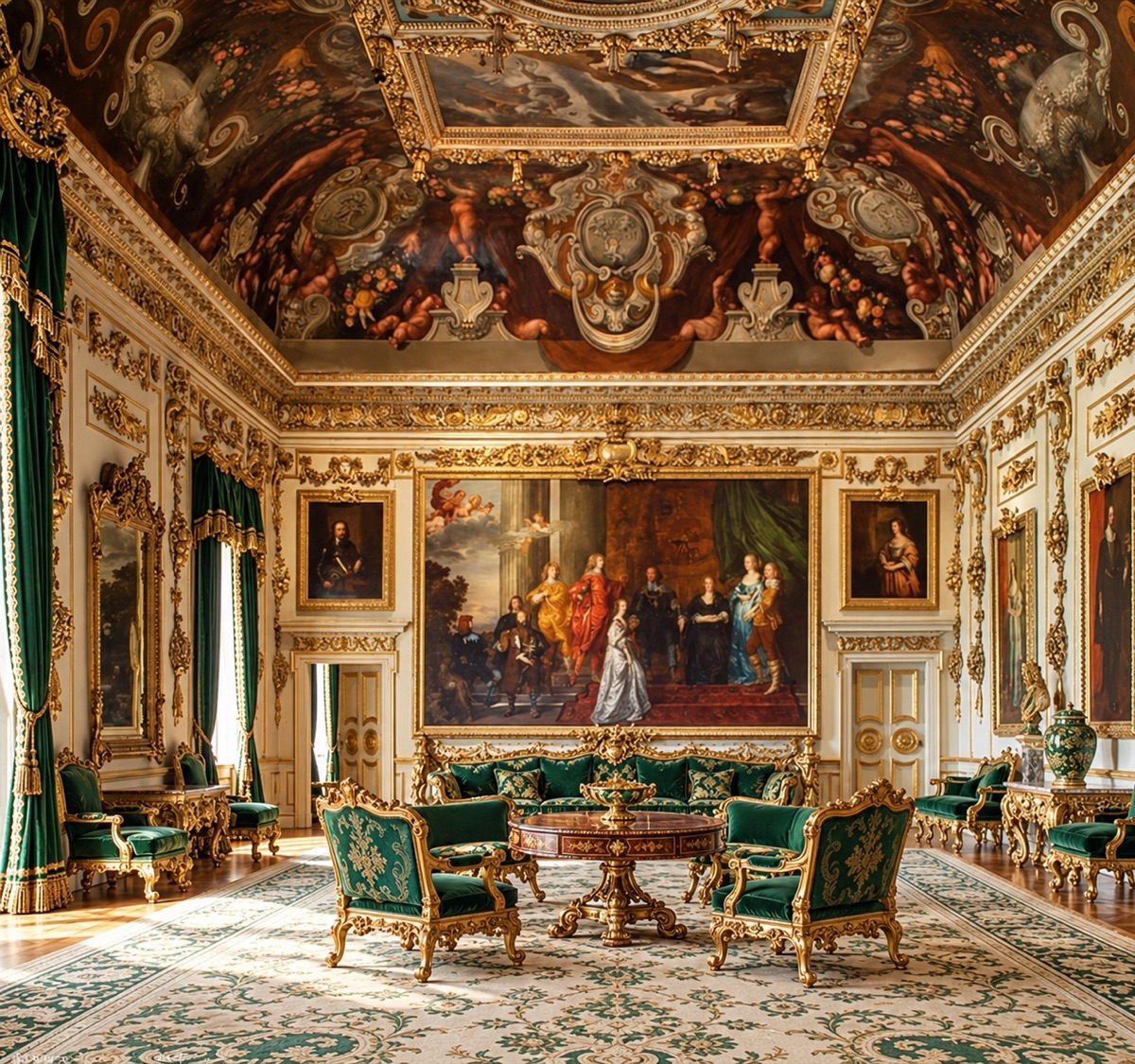
Baroque

17th–early 18th centuries

Proportion
Monumental, tall
Balance
Axial symmetry
Rhythm
Bold, dramatic
Materials
Gilding, marble, velvet
A Baroque interior.BaroquePicture to come.

Crimson, gold, deep shadow.

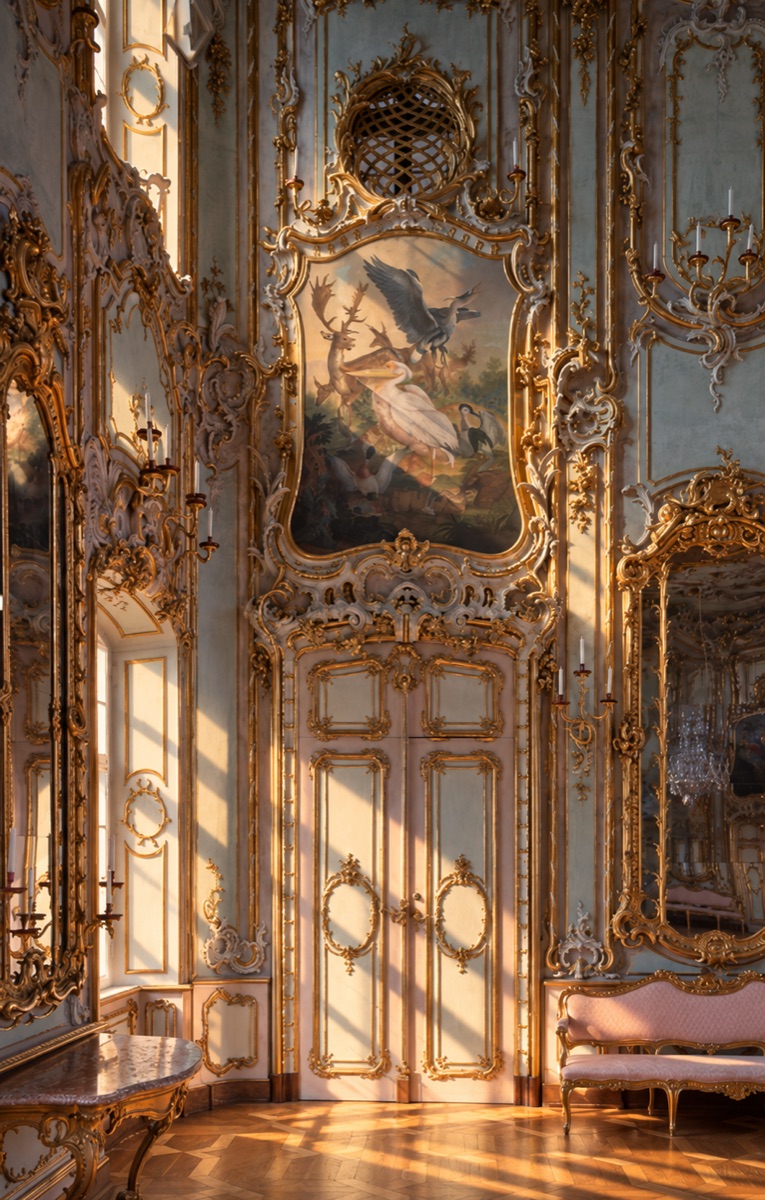
Rococo

18th century

Proportion
Delicate, intimate
Balance
Asymmetrical ornament
Rhythm
Flowing curves
Materials
Painted timber, mirrors, silk
A Rococo interior.RococoPicture to come.

Blush, celadon, cream, gilt.

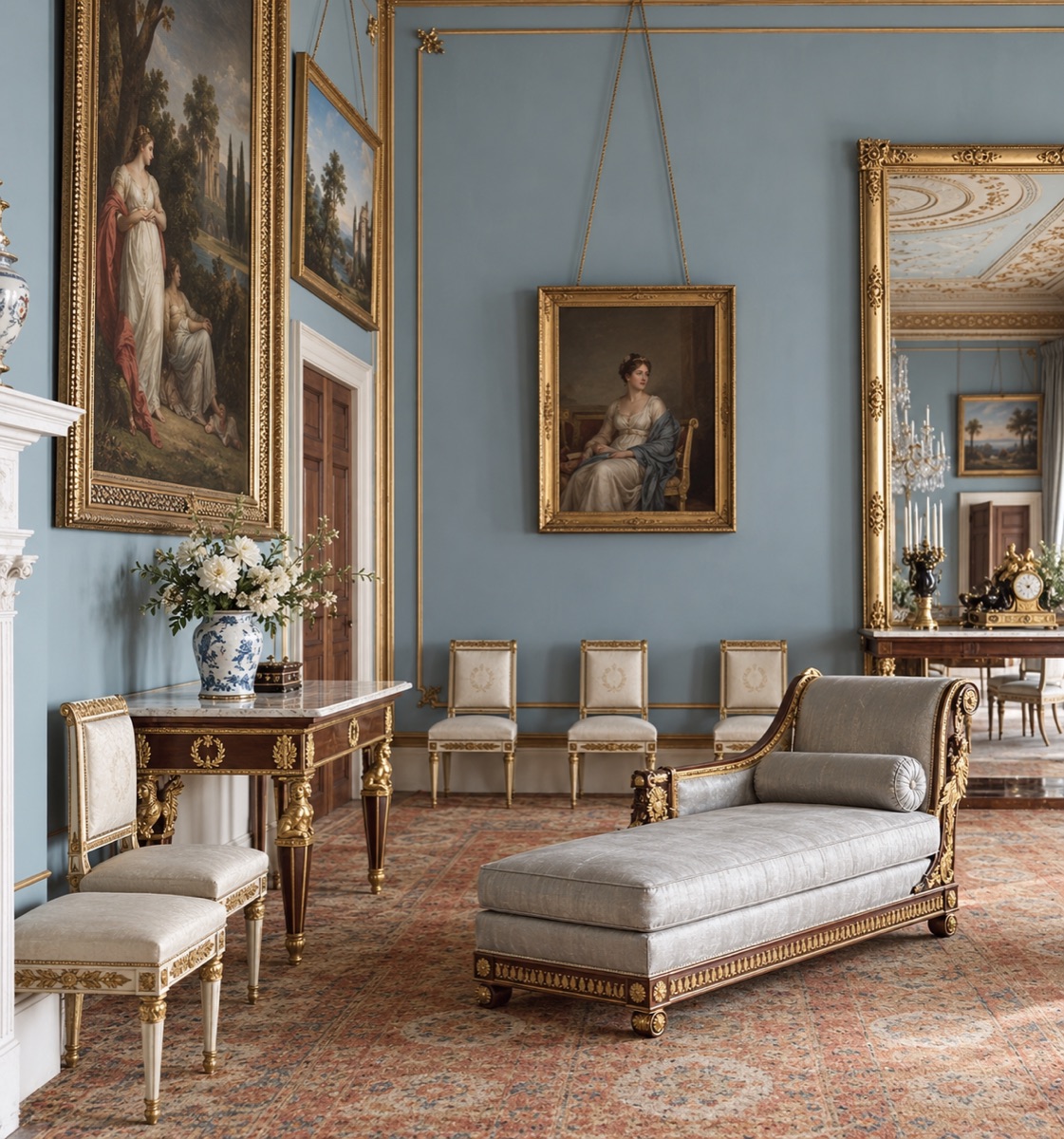
Neoclassical

Mid-18th–early 19th centuries

Proportion
Clear, measured
Balance
Symmetrical
Rhythm
Regular
Materials
Painted plaster, marble, fine mouldings
A Neoclassical interior.NeoclassicalPicture to come.

Stone, sage, white.

Empire

Early 19th century

Proportion
Massive
Balance
Strong symmetry
Rhythm
Steady, formal
Materials
Mahogany, gilt bronze
A Empire interior.EmpirePicture to come.

Mahogany, green, gold.

Gothic Revival

Late 18th–19th centuries

Proportion
Tall, vertical
Balance
Symmetrical
Rhythm
Repeated pointed forms
Materials
Carved oak, stained glass
A Gothic Revival interior.Gothic RevivalPicture to come.

Dark oak, ruby, cobalt.

Arts and Crafts

Late 19th–early 20th centuries

Proportion
Sturdy, human
Balance
Relaxed
Rhythm
Repeated natural motifs
Materials
Oak, copper, woven wool
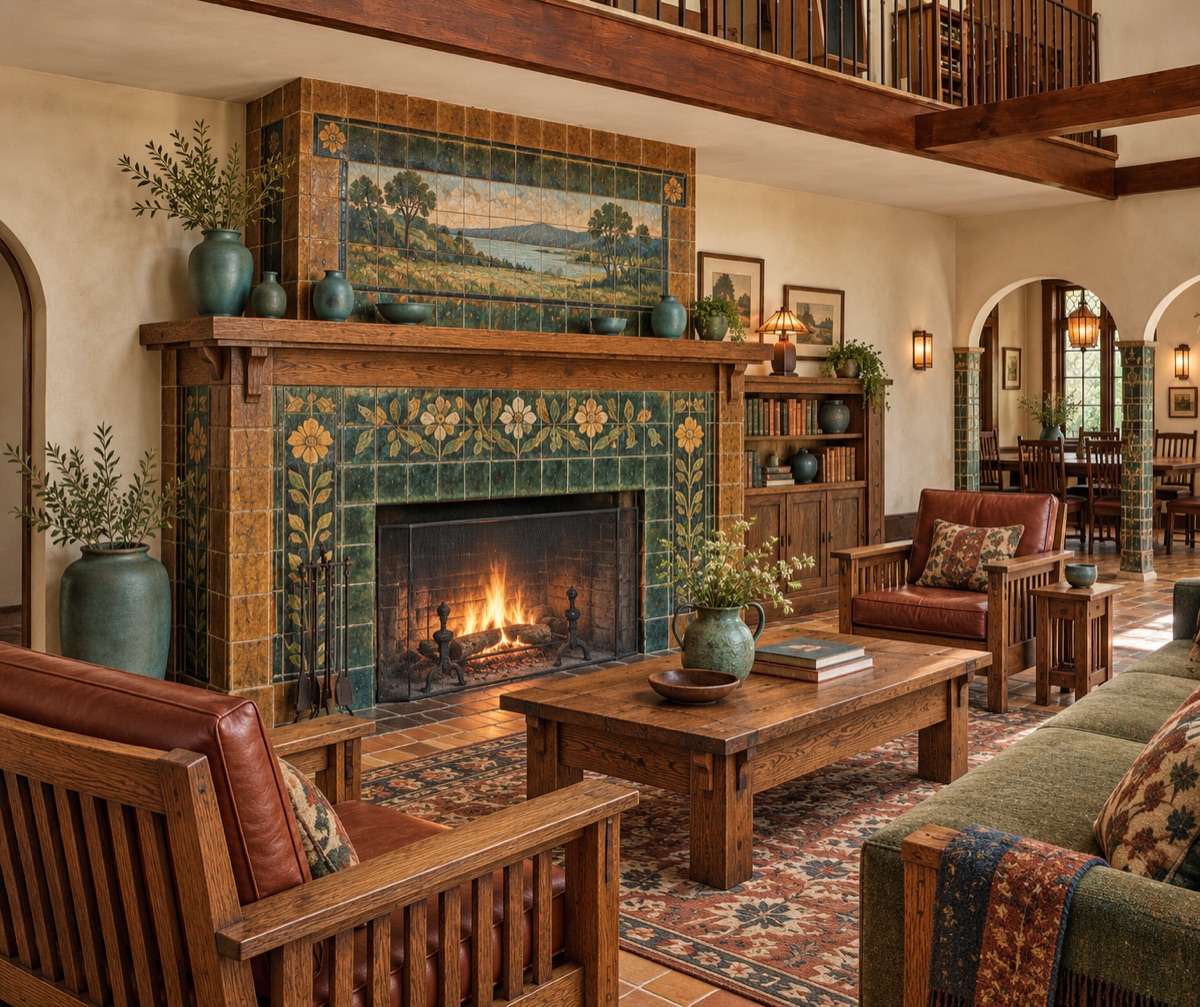
A Arts and Crafts interior.Arts and CraftsPicture to come.

Oak, sage, rust.

Art Nouveau

c. 1890–1914

Proportion
Slender, organic
Balance
Asymmetrical
Rhythm
Sinuous
Materials
Bent timber, glass, wrought metal
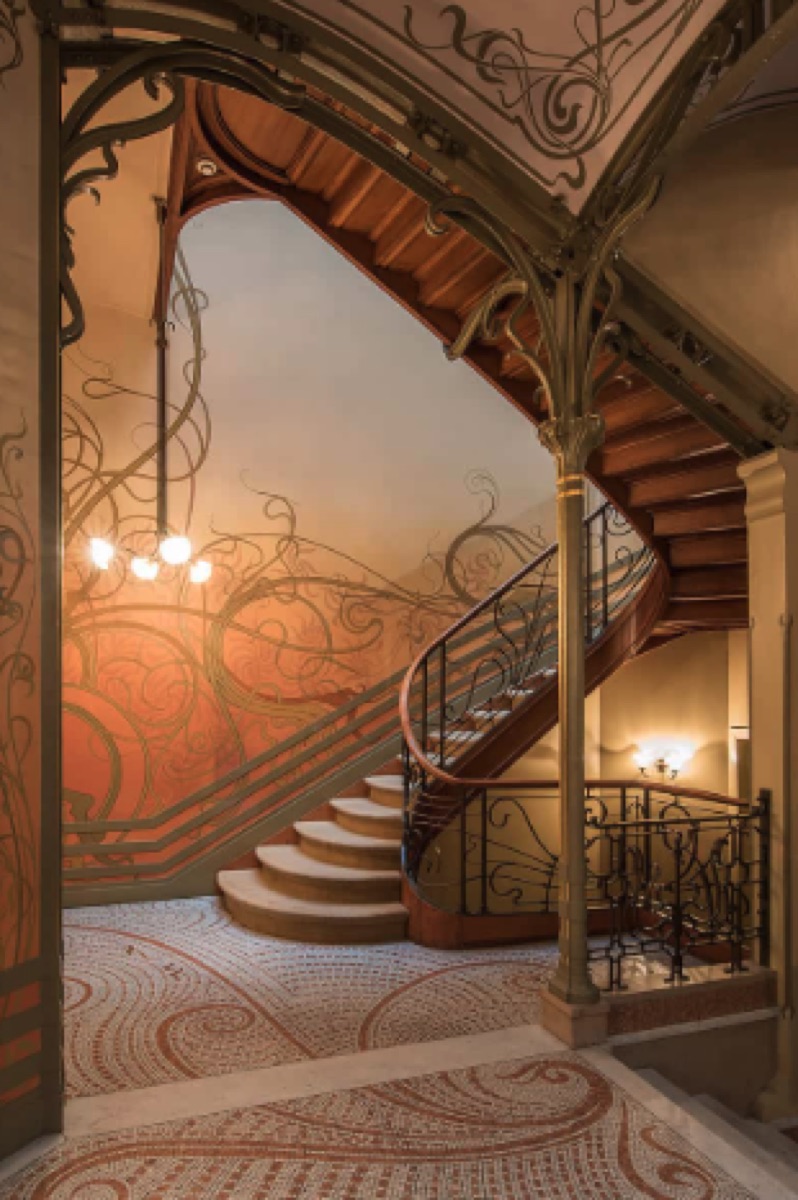
A Art Nouveau interior.Art NouveauPicture to come.

Olive, mustard, teal.

De Stijl

1917–1930s

Proportion
Abstract planes
Balance
Asymmetrical
Rhythm
Interlocking
Materials
Painted timber
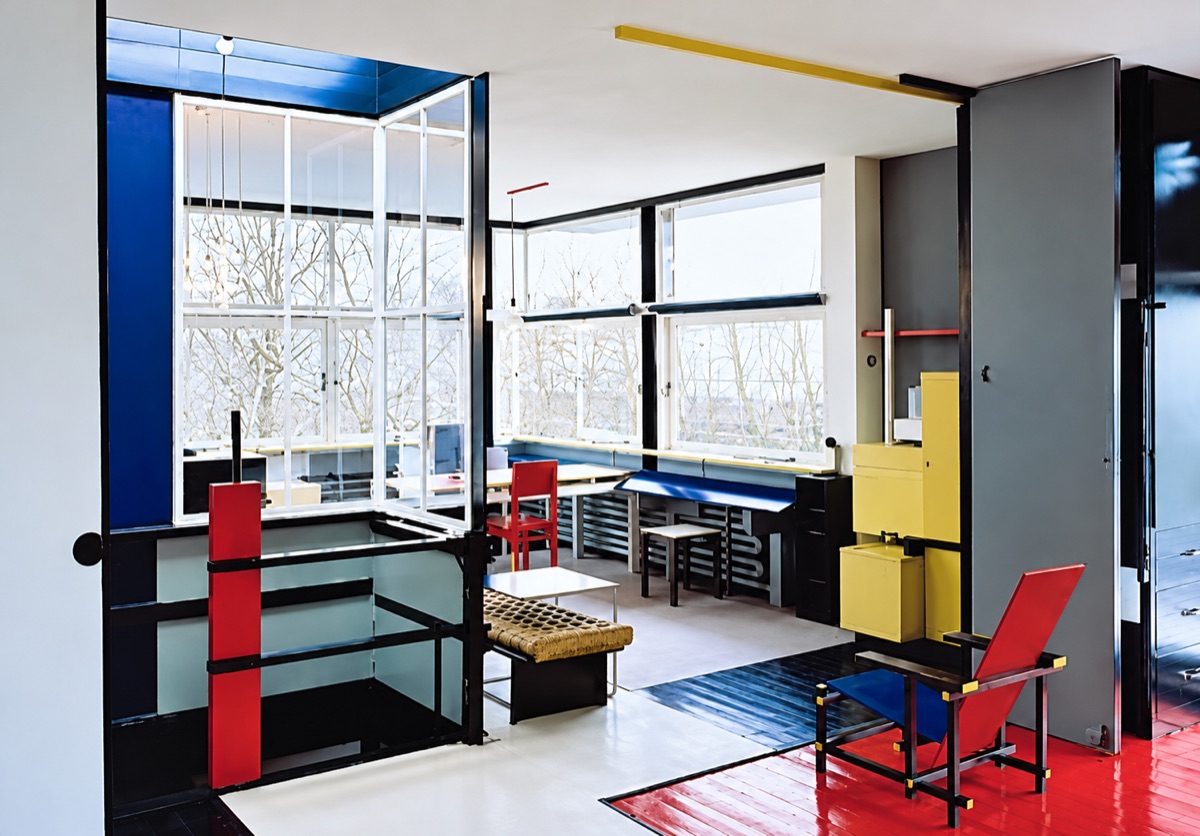
A De Stijl interior.De StijlPicture to come.

Primaries and black on white.

Bauhaus modernism

1920s–1930s

Proportion
Functional
Balance
Asymmetrical
Rhythm
Simple, regular
Materials
Tubular steel, leather, glass
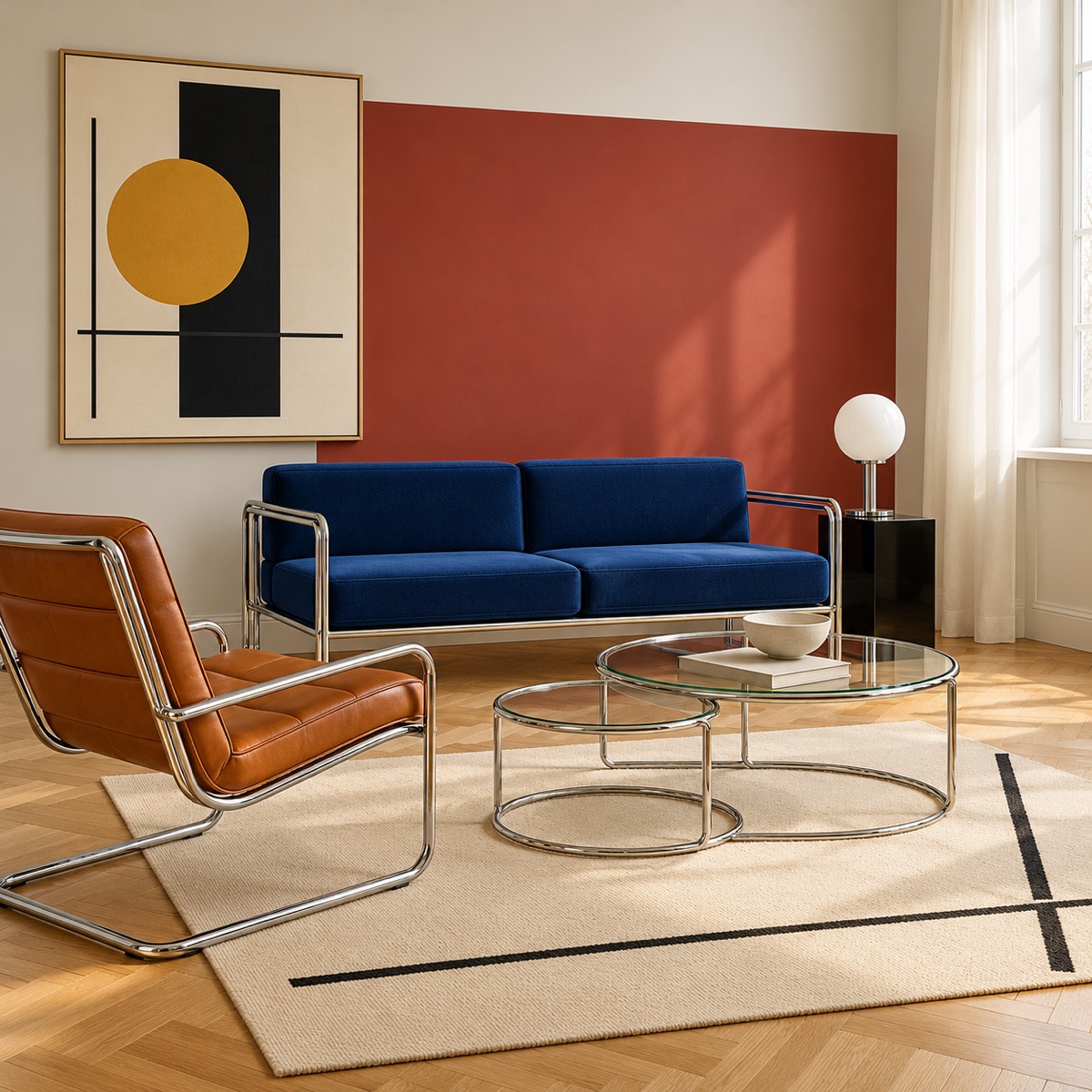
A Bauhaus modernism interior.Bauhaus modernismPicture to come.

Grey, black, a red accent.

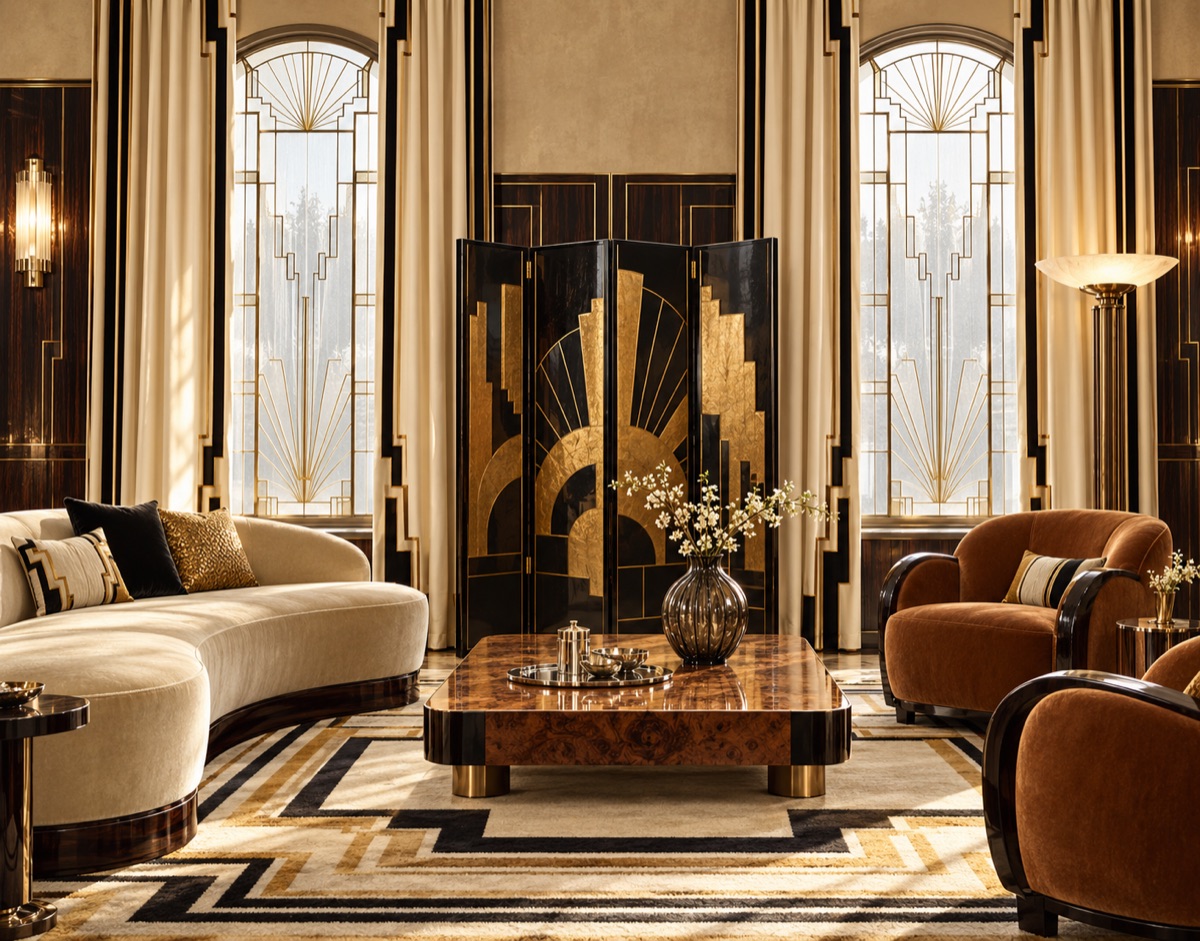
Art Deco

1920s–1930s

Proportion
Elongated, stepped
Balance
Symmetrical
Rhythm
Geometric, repeated
Materials
Lacquer, polished metal, rare veneers
A Art Deco interior.Art DecoPicture to come.

Emerald, gold, black.

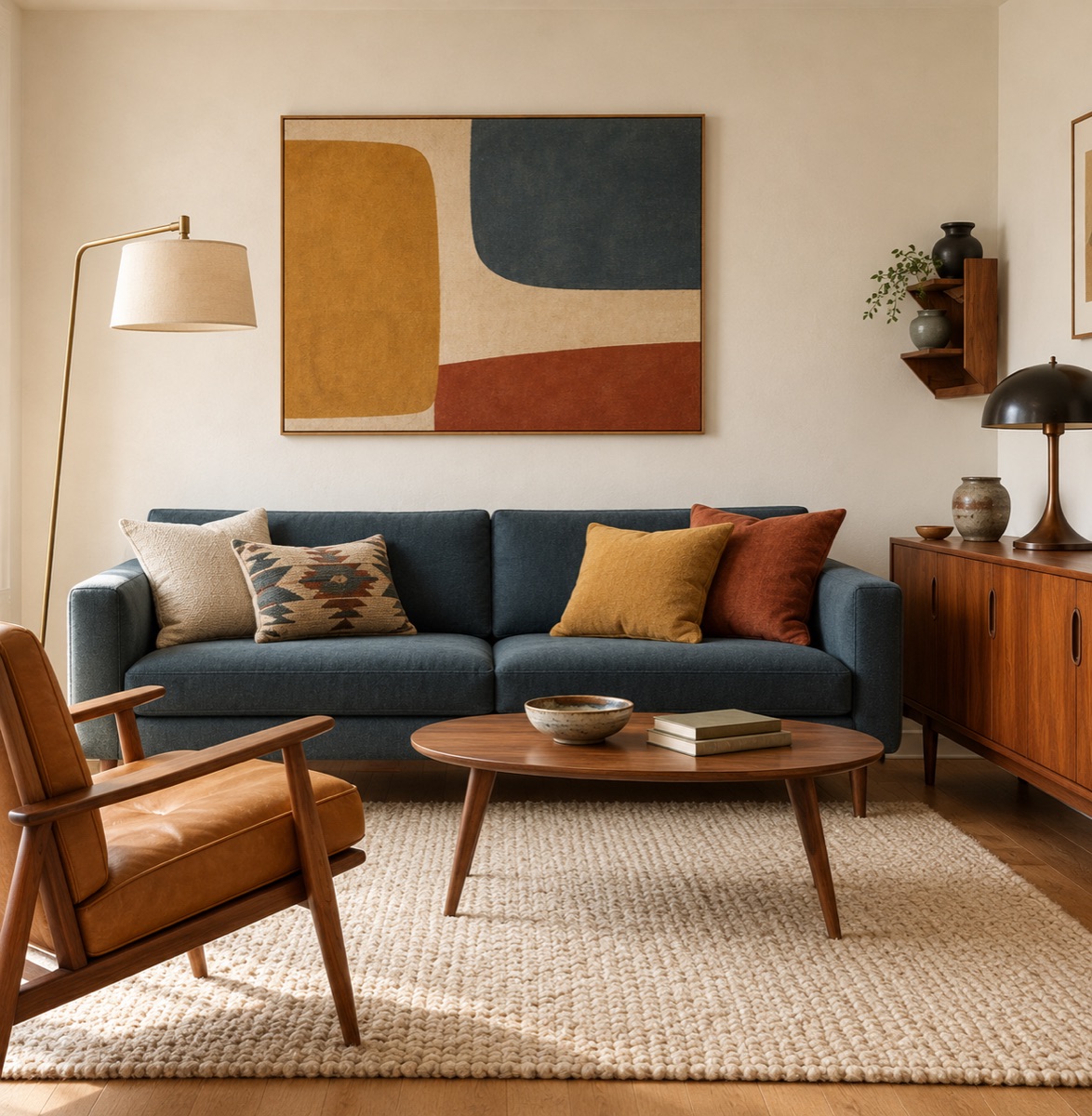
Mid-century modern

c. 1940s–1960s

Proportion
Low, human
Balance
Asymmetrical
Rhythm
Relaxed
Materials
Teak, moulded plywood, fibreglass
A Mid-century modern interior.Mid-century modernPicture to come.

Teak, mustard, green.

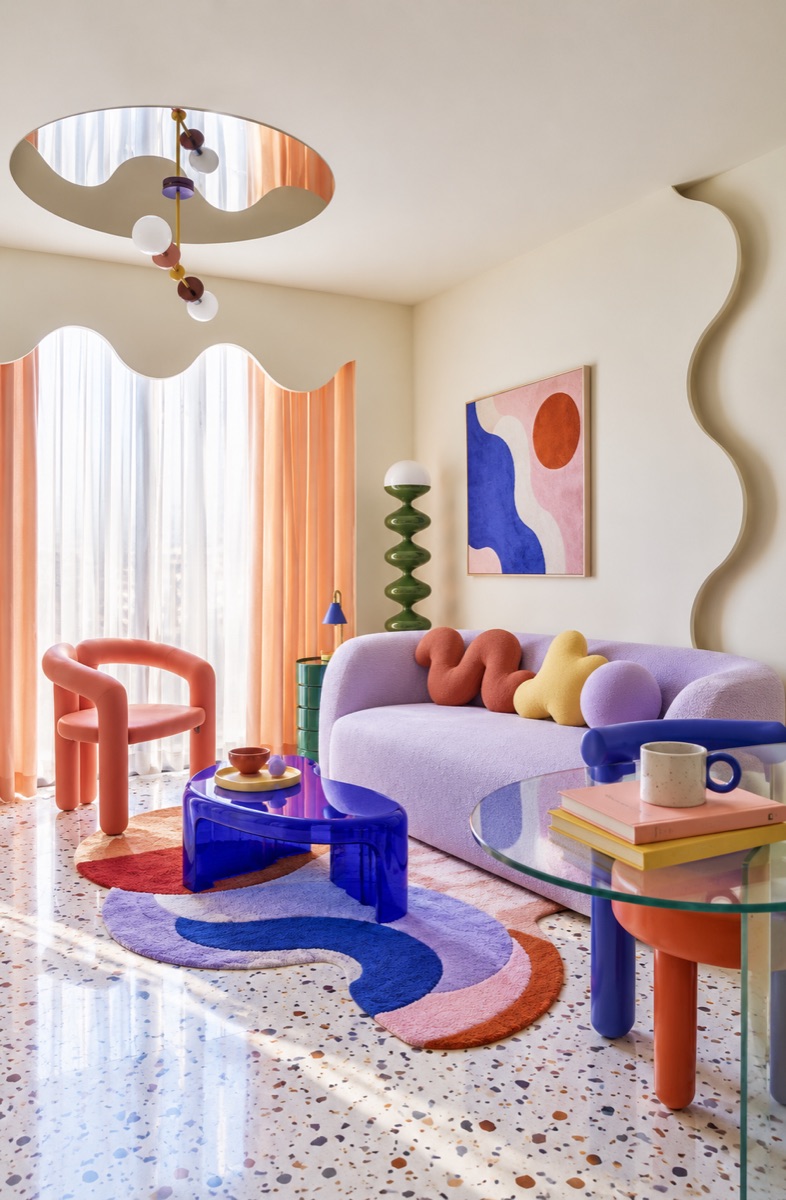
Memphis

1980s

Proportion
Exaggerated
Balance
Playful asymmetry
Rhythm
Clashing patterns
Materials
Plastic laminate, terrazzo
A Memphis interior.MemphisPicture to come.

Pink, turquoise, yellow, black.

Keep reading.

Where to go next.

Questions.

What people ask most about style.

What is my interior design style, and how do I find it?

Collect twenty or thirty images of rooms you love, without judging them, then look for what repeats. Note the shapes (curved or straight), the palette (warm or cool, quiet or bold), the materials (timber, metal, stone, textiles) and how full or empty the rooms are. Those repeats are your style, described through its ingredients rather than a label. Test it on one room, and keep what still feels right a few weeks later.

How do I style furniture in a room?

Start with one anchor, usually the sofa or the bed, and face it towards the focal point: a window, a fireplace or a view. Float furniture off the walls into conversation groups about 2.5–3 m across, and keep 90 cm clear for the main paths. Ground each group with a rug large enough for the front legs of every seat. Then layer: lighting at three heights, a few objects grouped in odd numbers, and empty space so the eye can rest.

How do I mix furniture styles?

Let one style lead, at roughly 80 percent, and let the others accent it. Link the pieces through something they share: a repeated colour, a material, a line or a scale. Mix across periods rather than within them, such as an antique table with modern chairs, and repeat each newcomer at least twice so it reads as intended. Keep the palette tight when the shapes vary, and vary the shapes when the palette is tight.

What is Art Deco interior style?

Art Deco is the glamorous style of the 1920s and 1930s. It combines bold geometry (stepped forms, chevrons, sunbursts and fans) with luxurious, contrasting materials: lacquer, polished brass and chrome, marble, mirror and rare veneers. Rooms are often symmetrical, with strong colours such as emerald, black and gold, curved upholstered furniture and dramatic lighting.

What is Zen interior design?

Zen interior design draws on Japanese and Buddhist ideas of calm and simplicity. It uses few objects, low furniture, natural materials such as wood, bamboo, stone, paper and linen, and a soft palette of earth tones. Clear surfaces, diffused natural light and a strong connection to nature, through plants, views or water, matter more than decoration.

What is shabby chic?

Shabby chic is a soft, romantic style built on furniture that looks old and loved: painted wood with worn edges, chipped finishes and vintage pieces. It pairs whites and pale pastels with faded florals, linen, lace and slipcovered sofas. The aim is comfort that looks collected over time, never brand new.

What is mid-century modern style, and is it still in style?

Mid-century modern covers design from about the 1940s to the 1960s: low furniture on slim tapered legs, organic curves, teak and walnut, moulded plywood and fibreglass, and clean lines with little ornament. It has stayed popular for decades because it is human in scale, practical and easy to mix with other styles. Today it is used more as an accent than as a full period room.

What is transitional interior design?

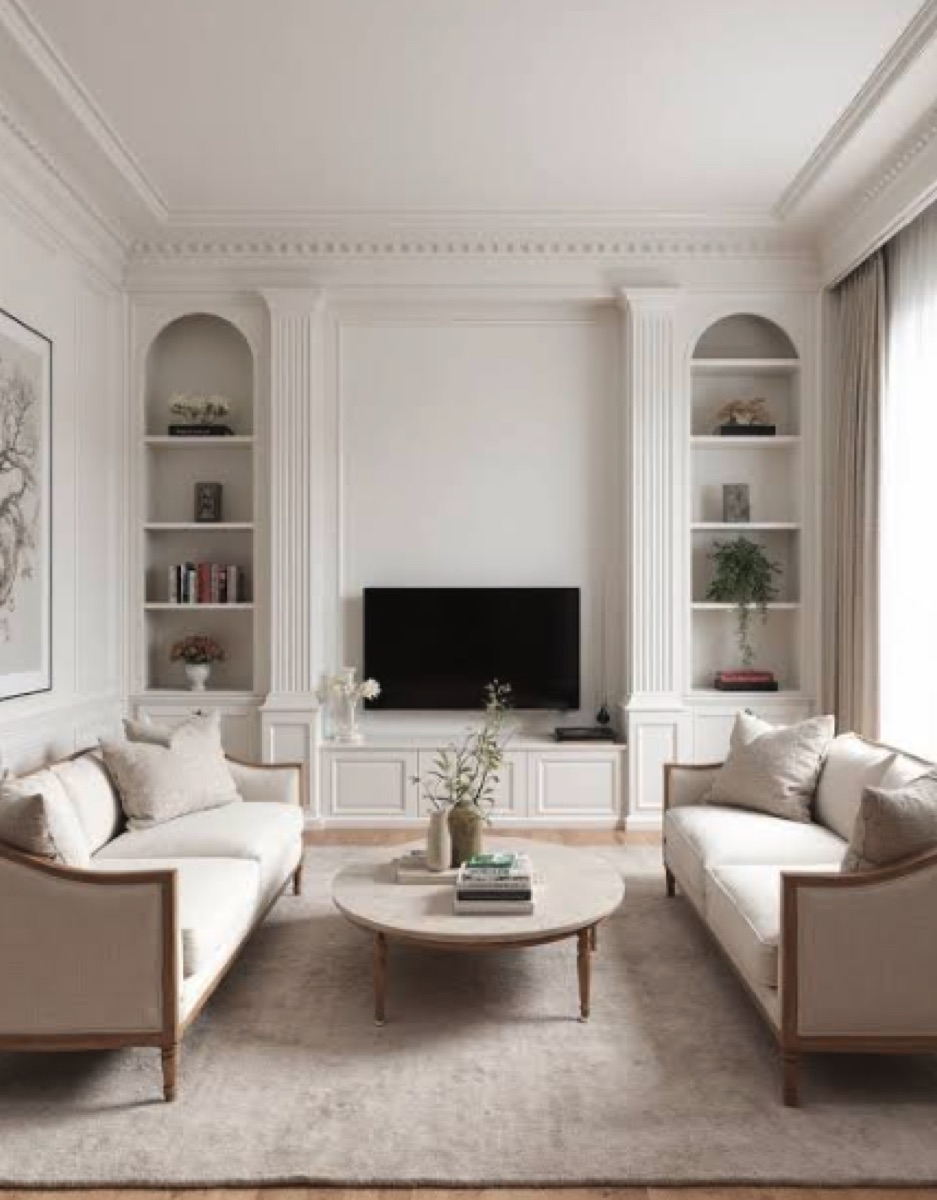
Transitional design sits between traditional and contemporary. It keeps the comfort and classic proportions of traditional furniture, but strips back the ornament and uses a calm, neutral palette with texture for interest. Think a rolled-arm sofa in plain linen beside a simple metal lamp. It suits people who want warmth without fuss.

What is eclectic design style?

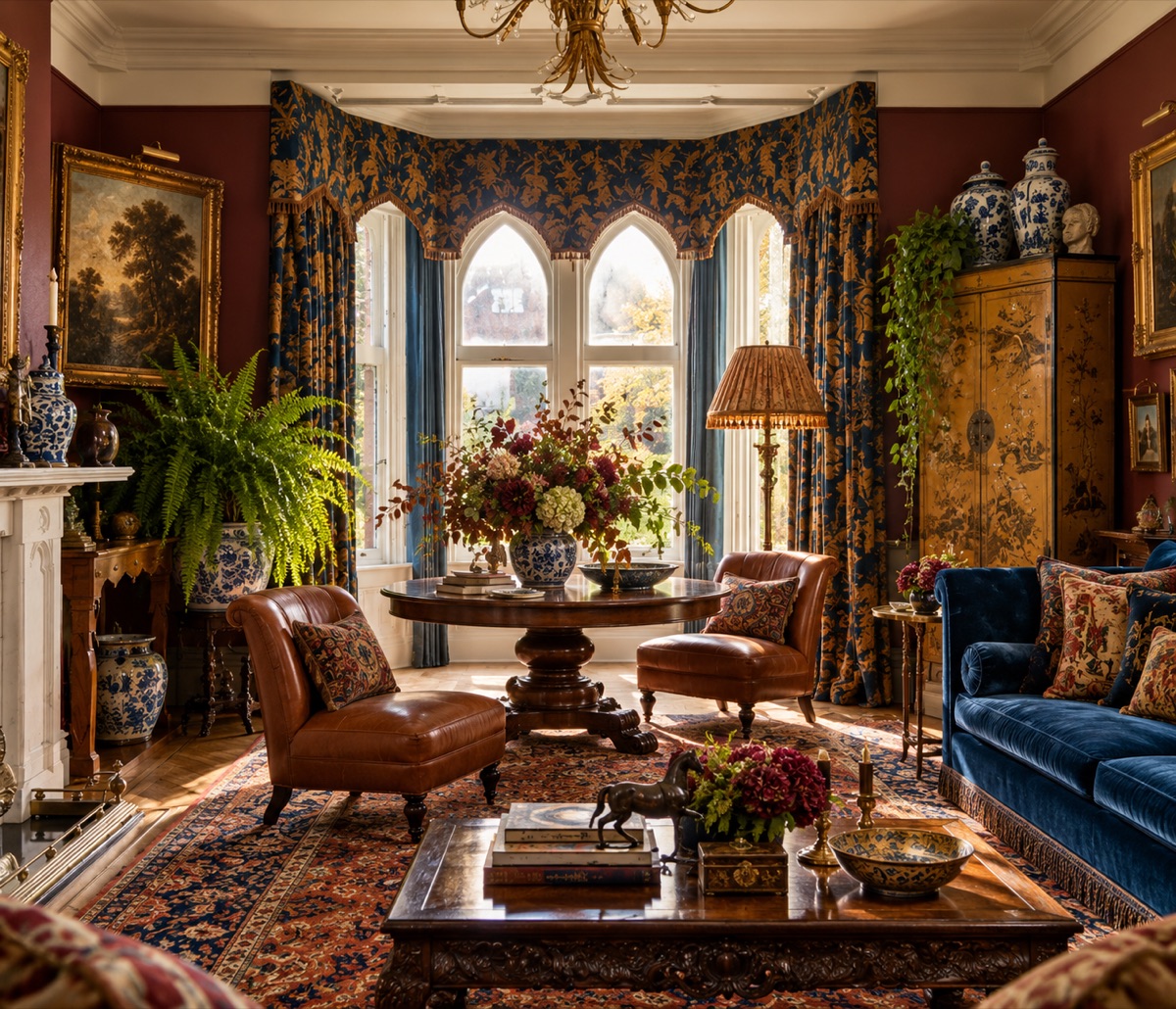
Eclectic style deliberately combines pieces from different periods, cultures and styles in one room. It works when something holds the mix together: a limited palette, a repeated material or shape, and a clear sense of scale and balance. Without that thread it reads as clutter; with it, the room feels personal and collected over time.

How many interior design styles are there?

There is no fixed number: lists range from about ten to more than forty, because styles overlap and new names appear all the time. A more useful approach is to learn the ingredients every style is built from (scale, proportion, balance, rhythm, materials and mood). With those, you can read any style, name or no name, and the thirteen historical styles above cover the main sources most modern styles borrow from.
Units